

Tirtha Darshan Holidays
Pan-India Pilgrimage Tour Specialists with 10+ Years of Experience Creating Seamless, Spiritually Enriching, and Memorable Journeys to India's Most Sacred Destinations. www.tirthadarshan.com
"Vrindavan is not just a place — it is a feeling. And like every feeling, it is best experienced at exactly the right moment."
Why Timing Your Visit to Vrindavan Matters
Vrindavan — the holy land where Lord Krishna spent his divine childhood — is a destination that transforms with every season. Whether you are a devout pilgrim seeking moksha, a spiritual seeker drawn to the town's 5,000+ temples, or a cultural traveller eager to witness India's most vibrant festivals, choosing the best time to visit Vrindavan can make the difference between an ordinary trip and an unforgettable darshan.
At Tirtha Darshan Holidays, we have been guiding pilgrims and travellers through the sacred lanes of Braj for over a decade. In this comprehensive guide, we break down every season, festival, and month — so you can plan your Vrindavan yatra with complete confidence.
Vrindavan Season‑by‑Season Guide
Vrindavan experiences four distinct seasons, each offering a unique spiritual atmosphere. Here is an in-depth look at what each period holds for travellers.
❄️ Winter (October – February)
Temperature: 5°C – 22°C
Winter is the best time to visit Vrindavan. Cool weather, festive temples, and major celebrations like Sharad Purnima, Diwali, and Kartik Mela make this the ideal season for every type of visitor.
- ✅ Comfortable sightseeing weather
- ✅ Major festivals & utsavs in full swing
- ✅ Parikrama season — barefoot walks are pleasant
- ✅ Yamuna boat rides are delightful
🌺 Spring / Holi (Feb – March)
Temperature: 15°C – 30°C
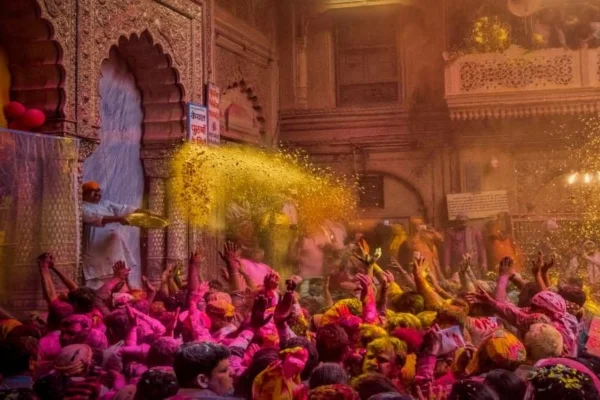
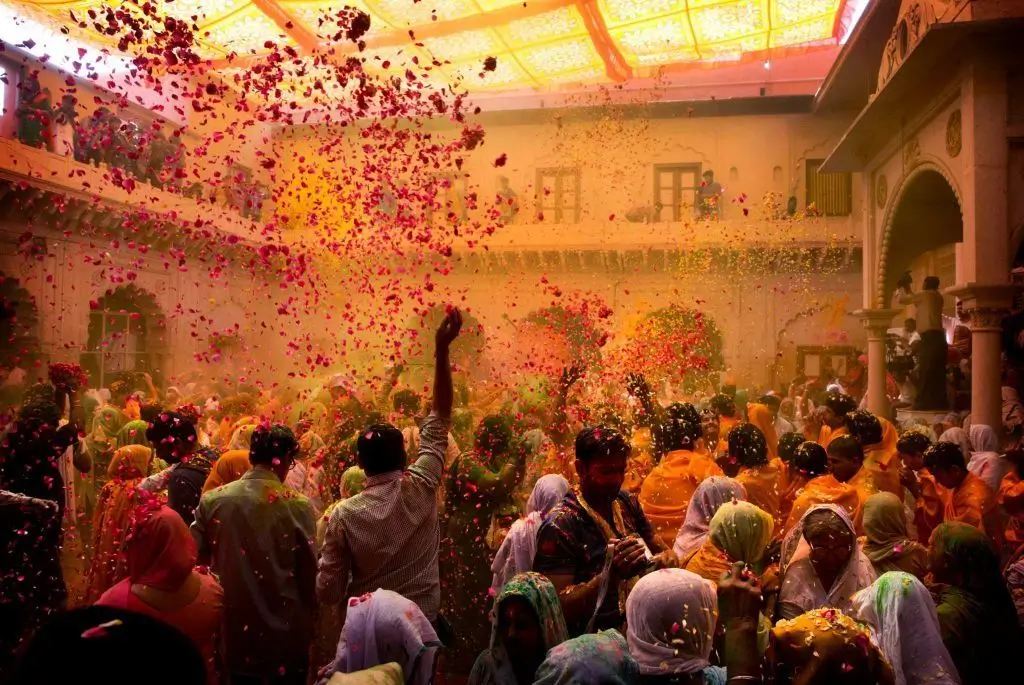
Vrindavan's world-famous Holi celebrations — Lathmar Holi, Phoolon wali Holi — make this a bucket-list season. Book accommodation 3–4 months in advance.
- ✅ World-famous Holi celebrations
- ✅ Flower Holi at Banke Bihari Temple
- ✅ Mild, pleasant temperatures
- ⚠️ Very crowded — plan ahead
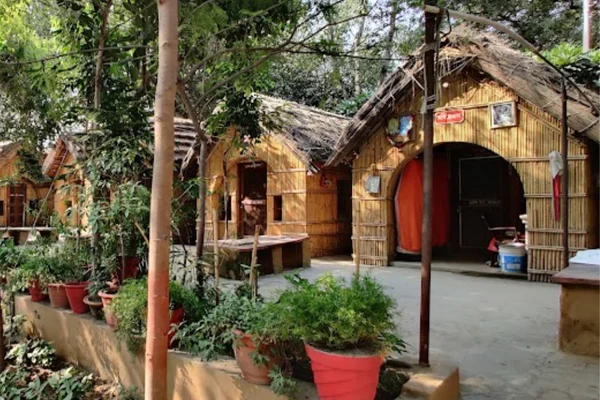
🌞 Summer (April – June)
Temperature: 28°C – 45°C
Summers are intense (42–45°C). Best for budget travellers who can plan early morning and late evening visits. Akshaya Tritiya in April carries high spiritual merit.
- ⚠️ Extreme heat — plan AM/PM visits only
- ✅ Fewer crowds, lower hotel rates
- ✅ Akshaya Tritiya (April) is auspicious
🌧️ Monsoon (July – September)
Temperature: 25°C – 35°C
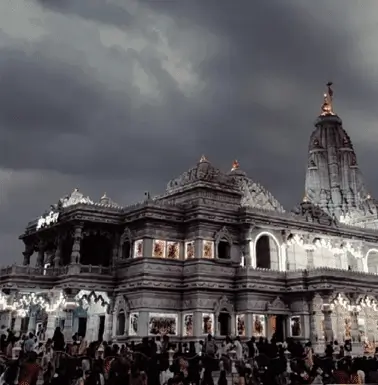
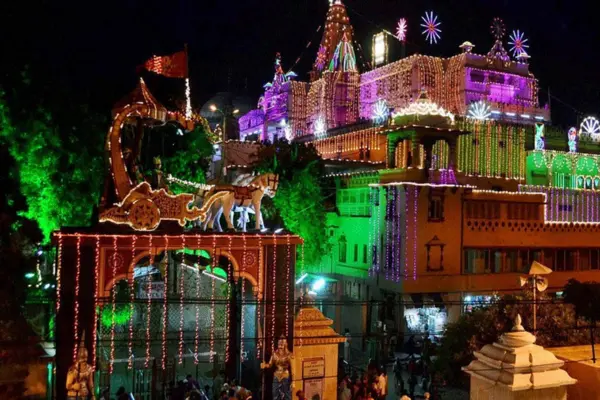
Monsoon transforms Vrindavan into a lush green paradise. Janmashtami (August) draws over a million devotees for the grandest celebration of Krishna's birth.
- ✅ Janmashtami — the biggest festival of the year
- ✅ Green, scenic environment
- ⚠️ Heavy rains & possible flooding
- ⚠️ Yamuna ghats may be submerged
Vrindavan Festival Calendar: Month‑by‑Month
Timing your trip around a festival elevates your Vrindavan experience from a pilgrimage to a once-in-a-lifetime spiritual spectacle. Here is the complete event calendar:
| Month | Festival / Event | Significance | Crowd |
|---|---|---|---|
| October | Sharad Purnima, Ras Lila | Krishna's divine Maharas dance under the full moon | High |
| November | Diwali, Govardhan Puja, Dev Deepawali | Thousands of diyas light the ghats — spiritually electric | Very High |
| November | Kartik Mela & Parikrama | Month-long 84-kos Parikrama yatra | Very High |
| December | Gita Jayanti | Celebration of the Bhagavad Gita's revelation at Kurukshetra | Moderate |
| January | Basant Panchami | Spring festival — yellow everywhere, lively temple celebrations | Moderate |
| February | Lathmar Holi (Barsana & Nandgaon) | Women playfully beat men with sticks — a 400-year living tradition | Very High |
| March | Holi — Phoolon wali Holi | Priests shower devotees with rose petals at Banke Bihari | Very High |
| April | Ram Navami, Akshaya Tritiya | Highly auspicious for starting pilgrimages and charitable acts | Low |
| August | Janmashtami | Krishna's birth — midnight celebration at every temple | Massive |
| September | Radhashtami | Birth of Radha Rani — grandly celebrated in Barsana | High |
Best Months to Visit Vrindavan — Detailed Breakdown
🌟 October & November — Our Top Pick
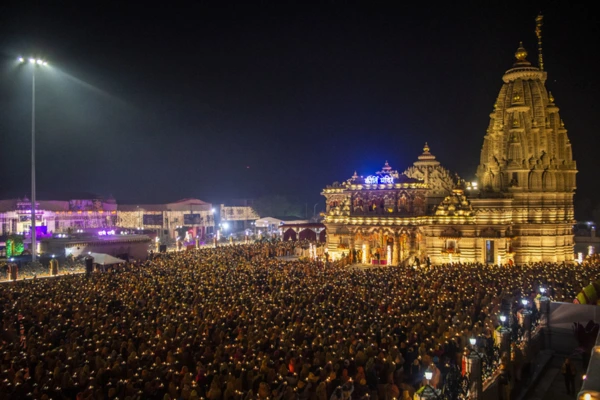
These two months represent the absolute best time to visit Vrindavan for a balanced experience. The weather is crisp, the festivals are magnificent, and every ghat glows with oil lamps during Dev Deepawali. Banke Bihari Temple, ISKCON Temple, Prem Mandir, and Nidhivan are all at their most accessible and atmospheric.
✨ February & March — Best for Festival Lovers
If witnessing Holi in Vrindavan is on your bucket list (and it absolutely should be), then February–March is your window. Book accommodation at least 3–4 months in advance as hotels sell out entirely. Tirtha Darshan Holidays can secure confirmed bookings and guided Holi packages even during peak season.
🌅 December & January — Peaceful Pilgrimage
For a quieter, more introspective yatra, mid-December through January is ideal. The morning fog adds a mystical quality to the ghats, and the mild temperatures make the famous 5 km Vrindavan Parikrama a genuinely meditative walk. This period is particularly beloved by senior pilgrims and families with young children.
🥁 August — Janmashtami, The Grandest Night
The midnight celebrations at every temple in Vrindavan during Janmashtami are spiritually overwhelming — every lane pulses with kirtans, abhishek rituals, and bhajans. Plan with a trusted tour operator as logistics require expert navigation during this period.
Essential Travel Tips for Visiting Vrindavan
Dress Modestly
Cover shoulders and knees inside temples. Carry a dupatta or shawl. Avoid leather accessories inside all temple premises.
Beware of Monkeys
Monkeys are sacred but mischievous. Keep sunglasses, food, and bags secured. Local guides know how to navigate safely.
Temple Timing Matters
Most temples follow Mangala Aarti (dawn) and Sandhya Aarti (evening) schedules. Arrive 30 minutes early during festivals for darshan.
Strictly Vegetarian City
Vrindavan is 100% vegetarian. Savour fresh prasad, kachori, lassi, and pedas from stalls near Banke Bihari and ISKCON.
Book Ahead in Festivals
During Holi, Janmashtami, and Kartik Mela, hotels are fully booked. Contact Tirtha Darshan Holidays 2–3 months in advance.
Walk the Parikrama
The 5 km barefoot Vrindavan Parikrama is spiritually rewarding. Best done October–February in early morning hours.
How to Reach Vrindavan
Nearest railway: Mathura Junction (12 km). Nearest airport: Agra (60 km) or Delhi IGI (160 km). E-rickshaws are plentiful inside the town.
Budget Planning
Accommodation ranges from ₹500 ashrams to ₹5,000+ hotels. Mid-budget travellers spend ₹2,000–₹4,000/day comfortably.
Top Temples & Places to Visit in Vrindavan
Understanding when to visit pairs naturally with knowing where to go. Here are Vrindavan's must-visit sacred sites:
1. Banke Bihari Temple
The spiritual heart of Vrindavan. The deity's curtain is drawn frequently so devotees don't get "lost" in His mischievous gaze. During Phoolon wali Holi, this temple becomes the most joyful place on Earth.
2. ISKCON Temple (Sri Sri Krishna-Balaram Mandir)
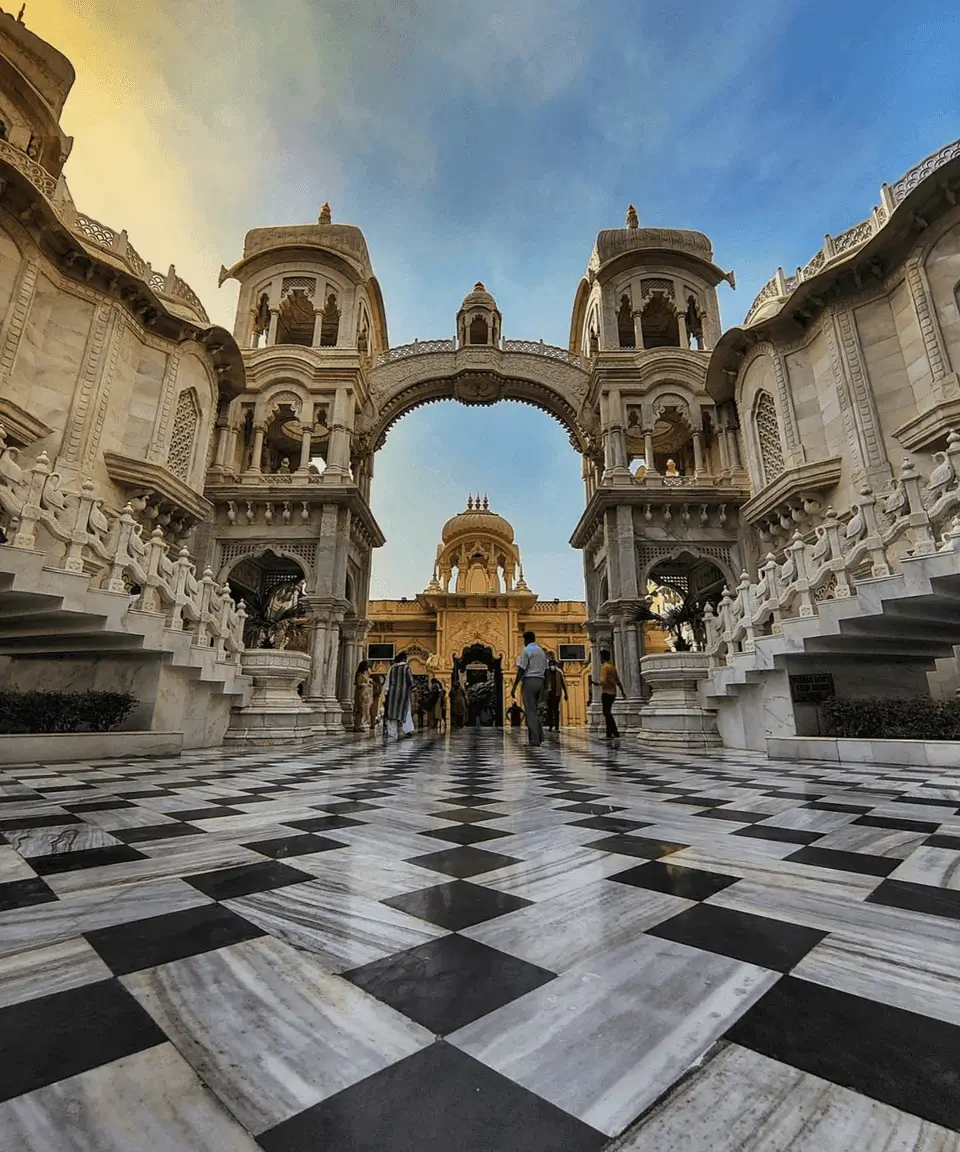
Founded by Srila Prabhupada, this stunning marble temple hosts a profound evening Aarti at 7 PM accompanied by kirtan — open to all visitors regardless of faith.
3. Prem Mandir
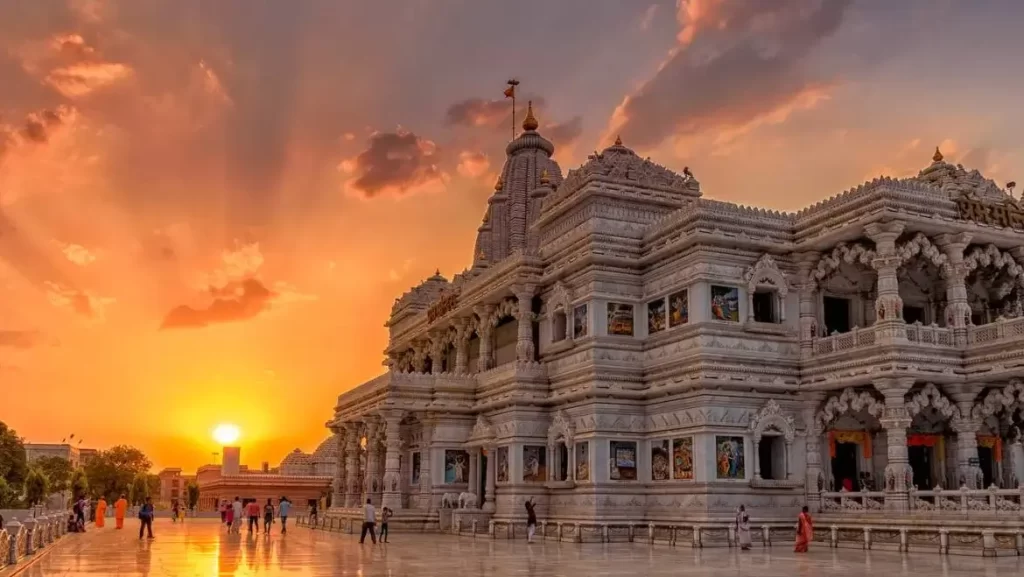
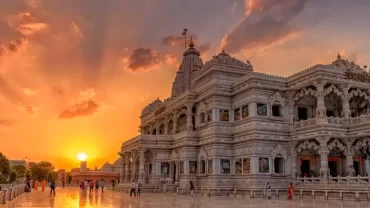
A breathtaking white marble temple that glows in changing colours after sunset. The light-and-fountain show depicting Krishna's leelas is not to be missed.
4. Radha Raman Temple
One of Vrindavan's most revered temples, housing a svayambhu (self-manifested) deity. The elaborate daily seva rituals here remain unchanged for 500 years.
5. Nidhivan
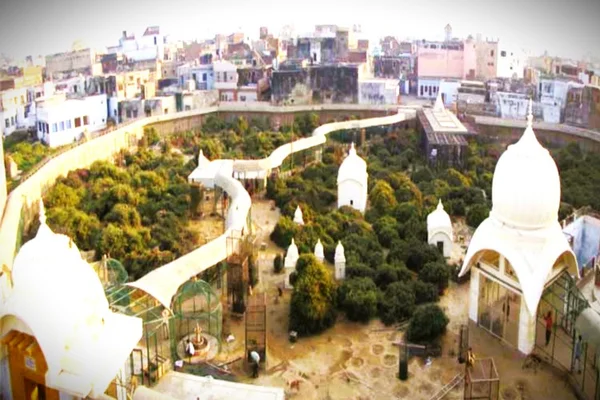
The most mystical site in Vrindavan. The forest is sealed at dusk — visit in daylight for a deeply spiritual encounter with the sacred tulsi groves.
6. Seva Kunj & Yamuna Ghats
The ancient groves of Seva Kunj and the peaceful Yamuna ghats are perfect for early morning meditation and quiet contemplation, especially from October through February.
Frequently Asked Questions About Visiting Vrindavan
Here are the most searched questions about Vrindavan travel — answered by our expert team at Tirtha Darshan Holidays.
October and November are widely regarded as the best months to visit Vrindavan. The weather is cool and pleasant (15°C–25°C), major festivals like Sharad Purnima, Diwali, and Kartik Mela are celebrated with great devotion, and all temples are vibrant with spiritual energy. February–March is a close second for those who want to experience the legendary Holi celebrations.
A minimum of 2–3 days covers the major temples and ghats in Vrindavan, plus a day for Mathura (Krishnajanmabhoomi, Dwarkadheesh Temple, Vishram Ghat). For a more complete yatra that includes Gokul, Barsana, and Govardhan, plan for 4–5 days. Tirtha Darshan Holidays offers customised 2-night, 3-night, and 5-night packages tailored to your schedule.
The Holi season in the Braj region spans about 10–15 days and follows this sequence: Lathmar Holi in Barsana → Lathmar Holi in Nandgaon → Phoolon wali Holi (Flower Holi) at Banke Bihari Temple → Main Holi day. We recommend arriving 2 days before Phoolon wali Holi, which is typically the most visually spectacular event. The exact dates vary annually by the lunar calendar. Book accommodation at least 3 months in advance as hotels sell out entirely.
Yes, Vrindavan is generally considered safe for solo women travellers, especially in the main temple areas. It is a deeply religious town where the culture is respectful of pilgrims. We recommend dressing modestly, avoiding isolated ghats after dark, and booking a guided tour for added security — particularly during crowded festivals. Tirtha Darshan Holidays can arrange female-guided tours on request.
Modest clothing is essential. Both men and women should cover their shoulders and knees. Women are advised to carry a dupatta or stole. Some temples (ISKCON, Radha Raman) have specific dress code requirements. Footwear must be removed before entering all temples — carry a drawstring bag for your shoes. Avoid wearing leather items (belts, wallets) inside temple premises as it is considered disrespectful.
Vrindavan is approximately 150 km from Delhi and reachable in 2.5–3 hours via the Yamuna Expressway. Your options: (1) Private taxi/car — most convenient, especially for families and pilgrimage groups; (2) Train to Mathura Junction (~2 hrs on express trains from Hazrat Nizamuddin or New Delhi), then e-rickshaw to Vrindavan (12 km, ~30 min); (3) Bus — UP Roadways buses from ISBT Kashmiri Gate run regularly to Mathura. Tirtha Darshan Holidays provides AC pick-up and drop services from Delhi, Agra, and Jaipur.
Monsoon (July–September) in Vrindavan offers a unique experience — lush greenery, fewer crowds, and the spectacular Janmashtami festival in August. However, heavy rainfall can cause waterlogging near the ghats and some roads become difficult. If attending Janmashtami is your goal, it is absolutely worth it — it is the single most electrifying night in all of Braj. For general sightseeing, we recommend carrying waterproof footwear and planning visits around rain forecasts.
The Vrindavan Parikrama is a 5–7 km barefoot circumambulation of the sacred town along the Parikrama Marg, passing 48+ significant ghats, temples, and divine pastimes sites. It can be done year-round, but the ideal time is October through February in the early morning (5–8 AM) or evening. During Kartik month (October–November), the Parikrama holds extra spiritual significance and thousands of devotees walk it daily. Our guides can accompany you and narrate the significance of every stop.
Janmashtami is the celebration of Lord Krishna's birth and is the most important festival of the year in Vrindavan. Starting from the evening of Ashtami (8th day of the lunar month), the town transforms into a sea of devotion. Every temple holds Abhishek (ritual bathing of the deity), bhajans, kirtans, dance performances (Ras Lila), and a grand midnight celebration called Nishita Puja at the exact moment of Krishna's birth. ISKCON Vrindavan and Banke Bihari Temple attract the largest crowds. Over 1 million pilgrims visit the Braj region during this period. Book well in advance — typically 6 months ahead for Janmashtami visits.
Absolutely — this is one of India's most popular pilgrimage-and-heritage combos. Agra (Taj Mahal, Agra Fort) is just 60 km from Vrindavan, making a 4–5 day itinerary very comfortable: Days 1–2 in Vrindavan/Mathura, Day 3 in Barsana/Govardhan, Day 4 in Agra. Tirtha Darshan Holidays offers a popular "Braj + Agra Heritage" package that covers all these destinations with a single, seamless itinerary. Contact us for a custom quote.
Accommodation in Vrindavan ranges across budgets. For budget pilgrims: ashrams like Bhaktivedanta Ashram, Radha Kund Ashram, and various dharamshalas offer ₹300–₹800/night. For mid-range: hotels like Hotel Ananda Krishna Van, Iskon Guest House (₹1,500–₹3,500/night) offer comfort with a spiritual setting. For premium stays: Radhe Krishna Resort and similar properties near Prem Mandir offer ₹4,000–₹8,000/night with modern amenities. We strongly recommend staying as close to the Parikrama Marg as possible for easy temple access. Tirtha Darshan Holidays curates and books the best accommodation suited to your group and budget.
Nidhivan (also called Nidhi Van) is one of the most mystical spots in all of Vrindavan. According to tradition, Lord Krishna and Radha perform their eternal Ras Lila here every night. The forest is sealed at dusk — not a single human, animal, or bird remains inside after sunset, and visitors are escorted out before dark. In the morning, the tulsi trees are said to bear marks of having been decorated, and offerings left for Krishna are said to have been accepted. Whether one is a devotee or a curious traveller, Nidhivan leaves a profound and inexplicable impression. Visit in the daytime for a serene, spiritually charged experience.
Vrindavan is a food lover's delight — all vegetarian, all divine. Must-try items include: Mathura Peda (the famous milk-based sweet, buy from Brijwasi Sweets), Kachori Sabzi (deep-fried puffed bread with spiced potato gravy — a Braj breakfast staple), Rabri & Lassi from the old lanes near Banke Bihari, Churma Laddoo, temple prasad (each temple offers distinctive flavours — ISKCON's prasad is particularly fragrant), and Malpua during festival time. Avoid drinking tap water and opt for sealed bottled water.
The Govardhan Parikrama is a 21 km barefoot circumambulation of Govardhan Hill — the sacred hill that Lord Krishna lifted to protect the people of Braj from torrential rains (as described in the Bhagavata Purana). It is considered even more spiritually meritorious than the Vrindavan Parikrama. Govardhan is just 26 km from Vrindavan. The best time to do it is from October through February, starting before dawn. Pilgrims may also do dandavat (full prostration) Parikrama, which can take 7–14 days. We include Govardhan in our 4-night and 5-night Braj yatra packages.
Most temples in Vrindavan are free to enter and open to all devotees regardless of religion or nationality. Some temples like ISKCON may require you to follow specific dress codes and may restrict photography inside the main sanctum. A few temples charge a nominal locker fee (₹10–₹20) for footwear storage. During major festivals, crowd management systems may be in place with timed entry queues — our guides know how to navigate these efficiently to ensure you get quality darshan time without long waits.
Lathmar Holi is a 400-year-old tradition unique to the Braj region, celebrated in Barsana (Radha's village) and Nandgaon (Krishna's village), both about 45–50 km from Vrindavan. In Barsana, women (Gopis) playfully beat men (who come from Nandgaon) with long bamboo sticks called lathis, while the men try to shield themselves with shields, all to the sound of folk music and abir (coloured powder). The event re-enacts Krishna's teasing of Radha and the Gopis. It takes place about a week before the main Holi day. This is one of India's most unique and photographed folk traditions — our Holi packages include Barsana Lathmar Holi with comfortable coach transport and expert guidance.
Yes, with the right planning, Vrindavan is very suitable for senior citizens. The main temples are accessible by e-rickshaw and the lanes, while narrow, are flat. During October–February, the climate is ideal for elderly visitors. We recommend: arriving on weekdays to avoid crowds, scheduling temple visits in the morning (cooler, less crowded), hiring a dedicated guide who can assist with mobility, and choosing accommodation close to the main temple cluster to minimise travel distances. Tirtha Darshan Holidays specialises in senior-friendly yatra packages with comfortable stays, slow itineraries, and dedicated support throughout.
Radhashtami is the celebration of Srimati Radharani's divine birth, observed on the Ashtami (8th day) of the Shukla Paksha (bright fortnight) of the month of Bhadrapad — which falls in September. The grandest celebrations take place in Barsana (Radha's birthplace), but Vrindavan's Radha Raman Temple and Banke Bihari Temple also hold magnificent celebrations. The temples are elaborately decorated, special abhishek rituals are performed, and a festive atmosphere pervades the entire Braj region for 2–3 days. If you wish to attend, plan your visit to Vrindavan for the days around Radhashtami in late August or early September.
Yes, a day trip is possible but not ideal. From Delhi (150 km): leave by 6 AM, arrive ~9 AM, visit 3–4 temples, and return by 7–8 PM. From Agra (60 km): a day trip is more comfortable, with 5–6 hours in Vrindavan possible. However, Vrindavan truly reveals its soul in the early morning Mangala Aarti (4:30–5:30 AM) and the evening Sandhya Aarti — both of which require an overnight stay. We strongly recommend at least one night in Vrindavan to experience its full spiritual depth. Tirtha Darshan Holidays offers day-trip and overnight packages from Delhi, Agra, and Jaipur with AC transport.
Beyond temple visits, Vrindavan offers deeply transformative experiences found nowhere else on Earth:
🪔 Mangala Aarti — Attending the pre-dawn aarti at Banke Bihari or ISKCON while the town is still quiet is profoundly moving. 🌸 Seva at a Temple — Many temples allow pilgrims to participate in flower-offering seva (service). ⛵ Yamuna Boat Ride — A sunrise or sunset boat ride on the sacred Yamuna River with a priest chanting prayers is an otherworldly experience. 🚶 Barefoot Parikrama — Walking the 5 km Parikrama Marg barefoot at dawn, with fellow devotees chanting "Radhe Radhe," is meditative and healing. 📖 Kirtan at ISKCON — The evening kirtan here is internationally renowned for its energy and devotion. 🌿 Nidhivan at dusk — Sitting near Nidhivan just before it is sealed for the night carries an inexplicable spiritual electricity.

Comment (0)