

There’s something magical about walking the same lanes where Lord Krishna once played his flute and charmed the gopis. Mathura and Vrindavan aren’t just destinations—they’re experiences that touch your soul, whether you’re deeply religious or simply someone who appreciates history, culture, and spirituality.
I’ve talked to countless travelers who’ve visited these twin cities, and the consensus is clear: three days is the sweet spot for exploring Mathura and Vrindavan without feeling rushed. You get enough time to soak in the devotional atmosphere, visit the major temples, witness the mesmerizing evening aartis, and still have moments to just sit by the Yamuna and reflect.
Let me walk you through everything you need to know for planning the perfect Mathura Vrindavan Tour 3 Days that balances spirituality, sightseeing, and authentic local experiences.
Why a 3-Day Tour is Perfect
Sure, you could technically cover the major temples in a day or two, but here’s what you’d miss: the early morning mangla aarti when the temples are bathed in a golden glow, the leisurely afternoon walks through the narrow lanes of Vrindavan, the unhurried conversations with local priests who share fascinating stories about Krishna’s leelas, and the peaceful evening hours by the ghats.
A Mathura Vrindavan Tour 3 Days gives you the luxury of time to experience rather than just tick off places from a checklist. You can explore at your own pace, participate in temple rituals, try local prasad and street food, and truly absorb the spiritual energy that permeates these ancient towns.
Best Time to Visit Mathura and Vrindavan
Timing can make a huge difference in your experience. Here’s the honest breakdown:
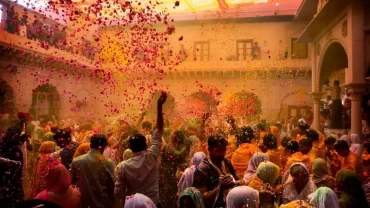
October to March (Winter Season) – This is hands down the best time for your Mathura Vrindavan Tour 3 Days. The weather is pleasant, with temperatures ranging from 10°C to 25°C. You can comfortably walk around temples and ghats without breaking into a sweat. The only caveat? It’s peak tourist season, so expect crowds, especially during Kartik Purnima (October-November) and Holi.
April to June (Summer) – The temperature can soar up to 45°C, making daytime temple visits quite challenging. If you’re visiting during summer, plan your temple visits early morning or late evening. The upside? Fewer tourists and cheaper hotel rates.
July to September (Monsoon) – The rains bring a romantic charm to these towns, but they can also disrupt travel plans. The ghats look beautiful during this time, but be prepared for muddy paths and occasional flooding near the Yamuna.
Special Festival Times – If you want to experience the full devotional fervor, plan your trip during Janmashtami (Krishna’s birthday, usually in August), Holi (the festival of colors in March), or Kartik Purnima. Just book everything well in advance and brace yourself for huge crowds.
Getting There: Route and Transportation
Reaching Mathura-Vrindavan
By Train: Mathura Junction is well-connected to major cities across India. From Delhi, you can catch trains like Gatimaan Express (fastest at 100 minutes) or regular express trains (2-3 hours). Vrindavan doesn’t have its own railway station, but it’s just 15 km from Mathura Junction.
By Road: The Yamuna Expressway makes road travel from Delhi incredibly smooth—about 3 hours by car. You can drive your own vehicle, hire a cab, or take a bus from Kashmere Gate ISBT in Delhi.
By Air: The nearest airport is in Agra (about 60 km away), but most travelers prefer flying to Delhi and then taking a train or car to Mathura.
Local Transportation
Once you’re in Mathura-Vrindavan, you have several options:
- Auto-rickshaws: Most convenient for short distances within the towns
- E-rickshaws: Eco-friendly and cheap for local commutes
- Cycle-rickshaws: Perfect for exploring narrow lanes of Vrindavan
- Private cab: Ideal for the entire 3-day tour if you want comfort and flexibility
- Rented bike/scooter: Great for independent travelers who want freedom to explore
For a Mathura Vrindavan Tour 3 Days, I’d recommend hiring a private cab for the entire duration.
Day-by-Day Itinerary for Your Mathura Vrindavan Tour 3 Days
Day 1: Exploring Mathura
Start your journey in Mathura, the birthplace of Lord Krishna. Begin early to make the most of your day.
Morning (6:00 AM – 12:00 PM)
- Krishna Janmabhoomi Temple: Start here at dawn. This is the exact spot where Krishna was born. The morning aarti is deeply moving. Expect security checks as the temple complex is guarded.
- Dwarkadhish Temple: A magnificent 19th-century temple with stunning architecture. Don’t miss the intricate marble work.
- Vishram Ghat: Take a holy dip or simply sit by the ghats and watch pilgrims perform rituals.
Afternoon (12:00 PM – 4:00 PM)
- Lunch at a local restaurant (try the famous Mathura pedas for dessert)
- Government Museum: Perfect for history buffs, showcasing sculptures and artifacts from the Mathura School of Art
- Brief rest at your hotel
Evening (4:00 PM – 9:00 PM)
- Vishram Ghat Evening Aarti: Return to Vishram Ghat for the spectacular evening aarti when hundreds of lamps are lit
- Walk through the local bazaars near Krishna Janmabhoomi
- Dinner at a local dhaba
Day 2: Discovering Vrindavan
Dedicate your second day to Vrindavan, located about 15 km from Mathura. This town has over 5,000 temples, but you’ll focus on the most significant ones.
Morning (6:00 AM – 12:00 PM)
- Banke Bihari Temple: The most famous temple in Vrindavan. Arrive early to avoid massive crowds. The deity’s darshan timing is unique—the curtains are opened and closed frequently to prevent people from getting mesmerized by Krishna’s beauty (according to legend)
- Prem Mandir: A relatively new but absolutely stunning temple complex. The marble carvings depicting Krishna’s life are breathtaking
- ISKCON Temple: Clean, well-organized, and serene. Don’t miss the multimedia show about Krishna’s life
Afternoon (12:00 PM – 4:00 PM)
- Lunch at ISKCON’s restaurant (excellent pure vegetarian food)
- Nidhivan: A mysterious grove where, according to local belief, Krishna still performs Raas Leela every night. The twisted trees create an otherworldly atmosphere
- Brief rest
Evening (4:00 PM – 9:00 PM)
- Seva Kunj: Adjacent to Nidhivan, believed to be where Krishna and Radha spent time
- Kesi Ghat: Watch the sunset and evening aarti by the Yamuna
- Explore the narrow lanes and small shops selling Krishna paraphernalia
Day 3: Offbeat Experiences and Nearby Attractions
Your final day is for places slightly off the beaten path and soaking in the local culture.
Morning (6:00 AM – 12:00 PM)
- Radha Raman Temple: One of the oldest temples in Vrindavan with unique deity manifestations
- Gokul: Just 15 km from Mathura, this is where Krishna spent his childhood. Visit Raman Reti, Brahmand Ghat, and the 84 Khamba temple
- Mahavan: Another nearby village associated with Krishna’s childhood
Afternoon (12:00 PM – 4:00 PM)
- Lunch at a local restaurant
- Govardhan Hill: About 25 km from Mathura, this is where Krishna lifted the hill to protect villagers from rain. You can do the Govardhan Parikrama (circumambulation) or just visit the main spots
- Kusum Sarovar: A beautiful stepped structure near Govardhan Hill, perfect for photography
Evening (4:00 PM – 9:00 PM)
- Return to either Mathura or Vrindavan for final shopping
- Attend one last evening aarti at your favorite temple
- Pack up and prepare for departure the next morning
Must-Visit Places: A Quick Reference
Here are the absolute must-visits for your Mathura Vrindavan Tour 3 Days:
In Mathura:
- Krishna Janmabhoomi Temple
- Dwarkadhish Temple
- Vishram Ghat
- Keshav Dev Temple
- Gita Mandir
In Vrindavan:
- Banke Bihari Temple
- Prem Mandir
- ISKCON Temple
- Nidhivan
- Radha Vallabh Temple
- Kesi Ghat
- Radha Damodar Temple
Nearby:
- Gokul (Krishna’s childhood home)
- Govardhan Hill
- Barsana (Radha’s birthplace)
- Nandgaon (Nanda’s village)
Cost Breakdown for Mathura Vrindavan Tour 3 Days
Let me give you a realistic cost estimate for different budget levels:
Budget Trip
- Accommodation
- Food
- Local transportation
- Temple donations and entry
- Miscellaneous
Mid-Range Trip
- Accommodation
- Food
- Private cab for entire trip
- Temple donations and entry
- Shopping and miscellaneous
Luxury Trip
- Accommodation
- Food
- Private AC car with guide
- VIP darshan arrangements
- Shopping and miscellaneous
These costs don’t include travel to and from your home city.
Contact for Cost and Customization: Check here
Important Tips for Your Visit
Dress Code: Modest clothing is appreciated. Avoid shorts, sleeveless tops, and revealing clothes. Many temples require you to remove shoes before entering.
Safety: Both towns are generally safe, but be cautious of pickpockets in crowded temples. Don’t carry valuables during temple visits.
Photography: Some temples prohibit photography inside. Always ask permission before clicking pictures.
Prasad and Donations: Priests might pressure you for donations. Donate what you feel comfortable with—there’s no fixed amount.
Crowds: Weekends and festival days are extremely crowded. If possible, plan your visit on weekdays.
Food: The towns are predominantly vegetarian. You won’t find non-veg food or alcohol easily (and it’s best to respect local sentiments).
Water: Carry bottled water, especially during summer. Temple towns can be exhausting to walk around in heat.
What to Eat
Don’t leave without trying:
- Mathura ka Peda: The famous sweet made from khoya
- Kachori-Sabzi: Local breakfast staple
- Lassi: Thick, creamy, and delicious
- Dahi-Jalebi: A unique sweet combination
- Ghevar: Especially during festivals
- ISKCON Prasad: Clean, hygienic, and delicious vegetarian meals
Shopping Guide
Bring back some spiritual souvenirs:
- Krishna idols and paintings
- Tulsi beads and malas
- Traditional clothing (kurta-pajamas, sarees)
- Religious books and music CDs
- Flute (to remind you of Krishna’s melody)
- Mathura pedas (they last for about a week)
The best shopping areas are near Krishna Janmabhoomi in Mathura and the lanes around Banke Bihari Temple in Vrindavan.
Final Thoughts
A Mathura Vrindavan Tour 3 Days isn’t just about visiting temples; it’s about experiencing a way of life that has continued for thousands of years. It’s about watching devotees lost in bhajans, seeing the evening aarti lamps floating on the Yamuna, tasting prasad offered with love, and feeling a connection to something greater than yourself.
Whether you’re seeking spiritual awakening, cultural immersion, or simply a peaceful getaway from city chaos, these three days will leave you with memories and stories that last a lifetime. The devotion here is palpable, the history is rich, and the experience is truly transformative.
Pack your bags, keep an open heart, and get ready to walk in the footsteps of Krishna. Radhe Radhe!
Frequently Asked Questions
Q: Is 3 days enough for Mathura and Vrindavan?
A: Yes, three days is ideal for a comprehensive tour. It gives you enough time to visit all major temples in both cities, explore nearby areas like Gokul and Govardhan, and experience the spiritual atmosphere without rushing. You can technically cover the main spots in 1-2 days, but you’ll miss the peaceful early morning aartis and the chance to explore offbeat temples.
Q: What is the best time of year for a Mathura Vrindavan Tour 3 Days?
A: October to March is the best time, with pleasant weather perfect for temple hopping. However, if you want to experience grand celebrations, plan your visit during Janmashtami (August) or Holi (March). Just be prepared for massive crowds during festivals and book accommodations well in advance.
Q: Can I visit both Mathura and Vrindavan in one day?
A: While technically possible, it’s not recommended. You’ll be rushed and won’t have time to absorb the spiritual atmosphere. A proper Mathura Vrindavan Tour 3 Days allows you to explore leisurely, attend morning and evening aartis, and visit nearby places like Gokul and Govardhan without exhaustion.
Q: What should I wear when visiting temples in Mathura and Vrindavan?
A: Dress modestly with covered shoulders and knees. Traditional Indian wear like kurta-pajama for men and salwar-kameez or sarees for women are ideal. Avoid shorts, sleeveless tops, and revealing clothing. You’ll need to remove shoes at most temples, so wear footwear that’s easy to slip on and off.
Q: Is it safe for solo female travelers?
A: Generally yes, as these are pilgrimage towns with heavy police presence. However, basic precautions apply: dress modestly, avoid isolated areas after dark, be cautious in crowded temples, and stay in reputable accommodations. Many solo female pilgrims visit without issues, especially when staying at ISKCON or temple guest houses.
Q: Can I get vegetarian food easily?
A: Absolutely! Both Mathura and Vrindavan are predominantly vegetarian towns with excellent pure-veg restaurants, street food, and temple prasad. You’ll find North Indian cuisine, South Indian options, and various temple canteens offering simple, hygienic meals. Non-vegetarian food and alcohol are not easily available and generally avoided out of respect for local sentiments.
Q: Should I hire a guide for the Mathura Vrindavan Tour 3 Days?
A: It’s not necessary but can enhance your experience if you want to learn detailed stories and history behind each temple. Most temples are easy to navigate independently, and fellow pilgrims and temple priests are usually happy to share information. If you do want a guide, hire licensed ones from official tourist centers to avoid scams.

Comment (0)